
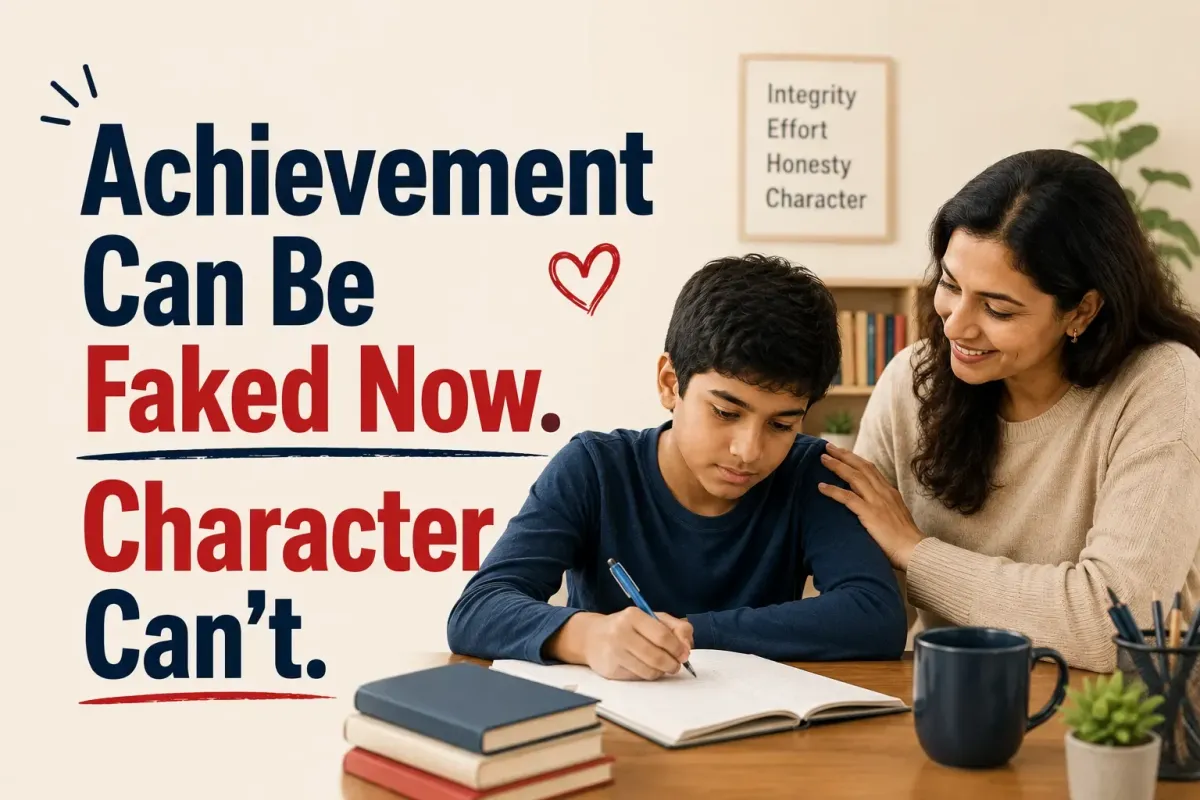
Achievement Can Be Faked Now. Character Can’t.
This fall, more than seven in ten teenagers are using AI to help with their schoolwork — and most of the schools they attend still have no clear rule about where help ends and cheating begins.
Sit with what that means. For the first time in history, the finished product — the essay, the problem set, the polished paragraph — can be produced in seconds by a child who understood none of it. The achievement is now trivially easy to counterfeit. The grade on the page may tell you nothing about the person who turned it in.
This is unsettling. It is also clarifying.
For a generation, we have quietly parented for the transcript — the score, the trophy, the acceptance letter — as if those were the point. They were only ever evidence. Evidence of something underneath: effort, honesty, the willingness to struggle through a hard thing and come out the other side having actually done it. When the evidence can be faked, what’s underneath is all that’s left. And what’s underneath is character.
Character is the one thing no machine can hand your child. A model can write the paper, but it cannot make your daughter care whether the words are truly hers. It can solve the equation, but it cannot give your son the quiet pride of having solved it himself. Those are formed at your table — in the ordinary moments when you notice the shortcut and decline to celebrate it, when you ask not “what did you get?” but “did you do it — and how do you feel about how you did it?”
Life readiness was never about credentials. The adult you are raising will enter a world where answers are cheap and integrity is rare — where the people who are trusted are the ones who do the real thing when faking it would be easier and no one would know.
Achievement, your child can borrow. Character, they have to build. Your job is to make sure they know the difference.
PRACTICAL TAKEAWAY
This week, change one question. When your child brings home a grade or a finished assignment, don’t lead with “what did you get?” Lead with “how did you do it?” Then listen for the story of the effort, not the size of the result — and let them see that the effort is the part you’re proud of.


