

How Parents Help Kids Learn to Think Ahead | ReadiKids
How Parents Can Help Children Learn to Think Ahead
Every parent knows the routine.
“Did you remember your homework?”
“Do you have your lunch?”
“Did you pack your uniform?”
“What time do you need to leave?”
“Did you remember to charge your phone?”
We ask because we care. We want our children to be prepared, avoid unnecessary problems, and get where they need to go.
But there is a question worth considering.
If we are always doing the remembering, when do our children learn to remember for themselves?
The Invisible Work Parents Do
Think about everything you keep track of during an ordinary week.
Appointments. School assignments. Sports schedules. Meals. Transportation. Birthdays. Supplies. Deadlines.
Much of this work happens in your head.
You anticipate what is coming, notice what is missing, and make adjustments before problems occur.
Children often see the results without seeing the thinking behind them.
The backpack is ready.
Dinner appears.
Everyone gets where they need to go.
But adulthood requires more than completing tasks. It requires recognizing what needs to be done before someone tells you.
That is a skill children can begin practicing long before they leave home.
One Question That Changes the Routine
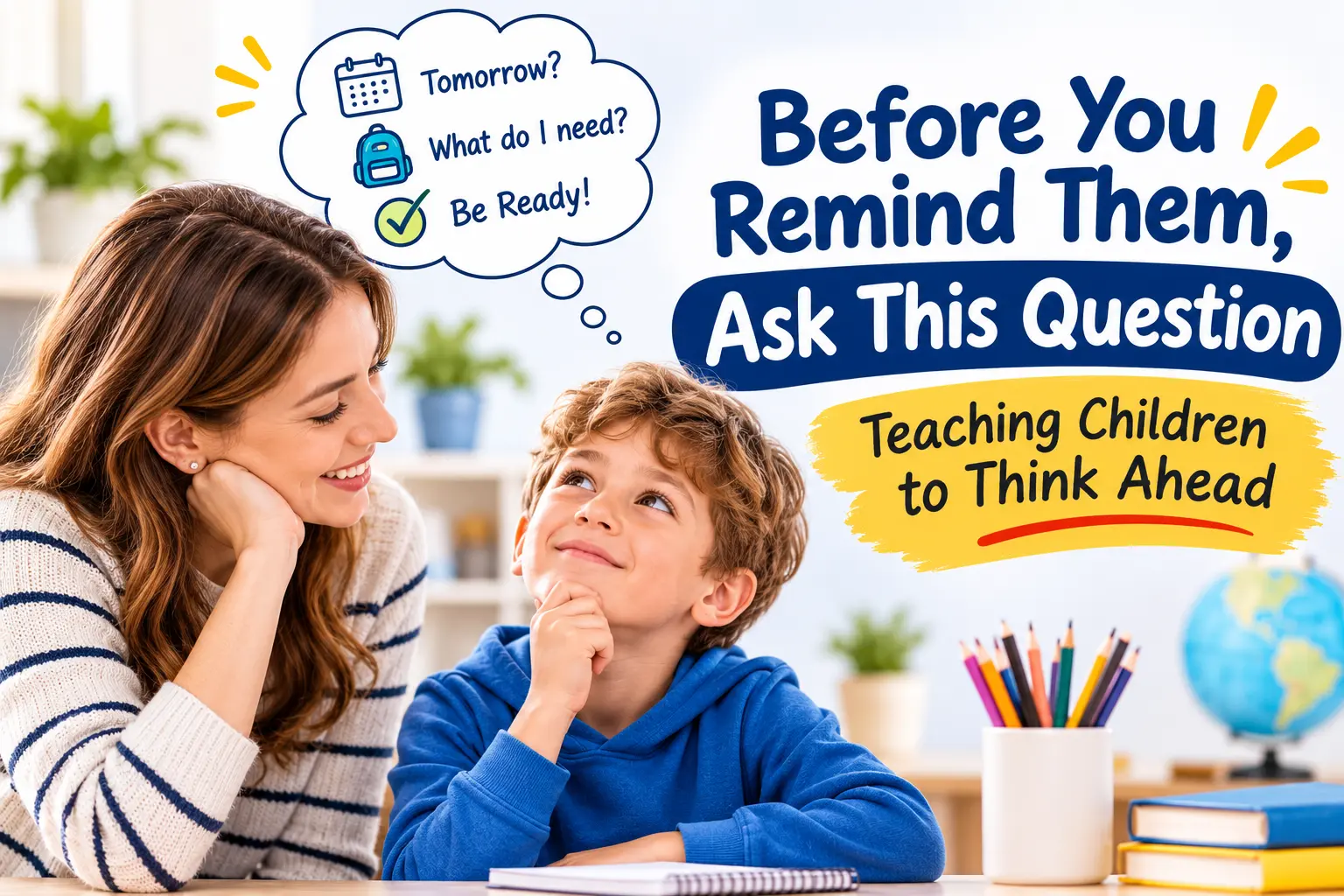
Instead of immediately reminding your child what needs to happen, try asking:
“What's coming up, and what will you need?”
It's a small change.
But notice what happens.
Rather than telling your child what to remember, you're inviting them to think ahead.
A younger child might say, “I have soccer tomorrow. I need my shoes.”
An older child might recognize that a school project requires supplies that aren't in the house.
A teenager might realize that working Saturday morning means making transportation arrangements Friday night.
The parent is still guiding.
But the child is doing more of the thinking.
That's where Life Readiness begins.
Thinking Ahead Is a Skill, Not a Personality Trait
We sometimes describe children as organized or disorganized, responsible or forgetful.
But planning is something children can learn.
They need opportunities to practice noticing what is coming, identifying what they need, and taking action before the last minute.
And they need room to make small mistakes.
A forgotten water bottle may be inconvenient.
A missed deadline may create a consequence.
Not every problem requires a rescue.
Sometimes the most valuable lesson comes when a child realizes, “Next time, I need to think about this earlier.”
The goal isn't to eliminate every mistake.
It's to help children develop the habits that make them increasingly capable.
Try the ReadiKids Look-Ahead Challenge
This week's activity takes about five minutes a day.
Choose a natural time when your family is already together—perhaps after dinner or before bedtime.
Ask your child three questions:
1. What's coming up tomorrow?
Let your child think through school, activities, responsibilities, and commitments.
2. What will you need?
Encourage them to identify supplies, time, transportation, money, preparation, or help.
3. What can you do tonight to be ready?
Now turn the thinking into action.
Lay out the clothes.
Pack the bag.
Check the schedule.
Charge the device.
Prepare the materials.
Make the plan.
Keep the activity short. This isn't another homework assignment.
It's practice for life.
Adjust the Challenge to Your Child's Stage
Little Explorer (0–10)
Start with simple choices and routines. “What do you need for tomorrow's trip?” Help your child gather the items.
Pathfinder (10–15)
Let your child manage more of the preparation. Ask questions instead of supplying the list.
Trailblazer (15–20)
Move toward weekly planning. Encourage your teenager to anticipate work schedules, transportation, deadlines, money needs, and competing commitments.
The goal is the same at every stage.
Gradually move the responsibility for thinking ahead from the parent to the child.
Put It in the Readiness Pack
ReadiKids helps parents build Life Readiness through ordinary experiences.
The process is simple:
HAVE: Learn what planning requires.
DO: Practice thinking ahead in everyday situations.
BECOME: Develop the habit of anticipating needs and taking responsibility.
MAKE IT THEIR OWN: Use that habit independently, without waiting for a parent's reminder.
Planning touches all four ReadiKids Building Blocks.
It develops practical organization, mental confidence, consideration for others, and the character to honor commitments.
And it doesn't require a special class or complicated program.
It happens in the life your family is already living.
A Small Change Worth Making
Parents will always need to remind children of some things.
That's part of parenting.
But every reminder offers a choice.
We can supply the answer.
Or, when the child is ready, we can help them develop the thinking that produces the answer.
Someday, they will have a meeting to attend, a bill to pay, a trip to plan, or a responsibility someone is counting on them to fulfill.
We won't always be there to remind them.
And that is exactly why we should begin preparing them now.
This week, before the next reminder, try asking: “What's coming up, and what will you need?”
You may be surprised by what your child begins to notice.
Your ReadiKids Challenge
Try the five-minute Look-Ahead Challenge for seven days. At your next Family Council, ask everyone to share one time they prepared for something without being reminded.
Celebrate the progress, not perfection.
Life is the classroom. Make every day count.


