

The Skill Most Parents Are Forgetting to Teach (And Why It Matters More Than Grades)
In a world obsessed with academic performance, test scores, and achievement metrics, there’s a quieter skill that often gets overlooked—but it may matter more than all the rest: adaptability.
Not intelligence. Not talent. Not even discipline.
Adaptability.
The ability to adjust, recover, and move forward when things don’t go as planned.

Why Adaptability Is the Real Advantage
Your child is growing up in a world that’s changing faster than any generation before. Careers are evolving. Technology is reshaping industries overnight. The path from education to success is no longer linear.
What does that mean?
It means the kids who thrive won’t be the ones who had everything figured out early. They’ll be the ones who learned how to figure things out as they go.
Adaptability builds:
Resilience when plans fall apart
Confidence in unfamiliar situations
Creativity under pressure
Emotional stability during change
In short, it prepares kids for real life—not just school.
The Problem With “Perfect Path” Parenting
Many well-meaning parents unintentionally limit adaptability by over-structuring their child’s life.
We plan every step:
The right classes
The right extracurriculars
The right outcomes
But when kids are always guided toward the “correct” path, they miss something critical: the experience of navigating uncertainty.
They don’t learn how to pivot. They learn how to follow.
How to Teach Adaptability (Without Chaos)
This doesn’t mean removing structure entirely. It means creating intentional space for growth through challenge.
Here are a few practical ways to build adaptability into everyday parenting:
1. Let Them Struggle (A Little)
When your child hits a problem, resist the urge to jump in immediately. Give them time to think, try, fail, and retry. That process is where adaptability is built.
2. Normalize Change
Talk openly about changes in your own life—work shifts, plans falling through, unexpected challenges—and how you handle them. Kids learn more from what you model than what you say.
3. Encourage Problem-Solving Over Perfection
Instead of asking, “Did you get it right?” ask, “What did you try?” or “What would you do differently next time?”
4. Introduce Controlled Discomfort
New environments, new skills, new responsibilities—these stretch your child’s comfort zone in healthy ways.
5. Celebrate Recovery, Not Just Success
Pay attention to how your child bounces back from setbacks. That’s where the real growth happens.
A Simple Example
Imagine your child forgets a homework assignment at home.
The instinct? Rush it to school.
The opportunity? Let them experience the consequence, figure out how to explain it, and plan better next time.
It’s a small moment—but these small moments compound into real-life capability.
The Long-Term Payoff
Grades can open doors.
Adaptability determines what your child does once they walk through them.
When kids know how to adjust, recover, and keep moving forward, they’re not limited by circumstances—they’re equipped to handle them.
And in today’s world, that might be the most valuable skill of all.
America Doesn't Have a Child Problem. It Has a Life Readiness Problem.
Across America, employers struggle to find dependable young workers.
Colleges report increasing numbers of students who lack resilience and independence.
Parents feel overwhelmed trying to prepare children for a future that looks very different from the one they experienced.
These challenges appear unrelated.
They aren't.
They all point to the same issue:
Too many young people are reaching adulthood without intentionally developing the practical skills, emotional resilience, character, and responsibility needed to thrive.
That is a Life Readiness problem.
At Futures Fulfilled, we believe the solution begins where it always has—with parents.
When parents intentionally develop the adults their children are becoming, the effects ripple outward.
Families become stronger.
Schools become more effective.
Communities become healthier.
Employers gain capable workers.
Our mission is not simply to help children succeed in school.
Our mission is to help families prepare children for life.
Through research, resources, parent leadership, and the ReadiKids Life Readiness System, we are building a national movement that equips parents to intentionally shape the next generation.
Because when we prepare children for life, we prepare them for everything that follows.
That's an investment whose return lasts for generations.
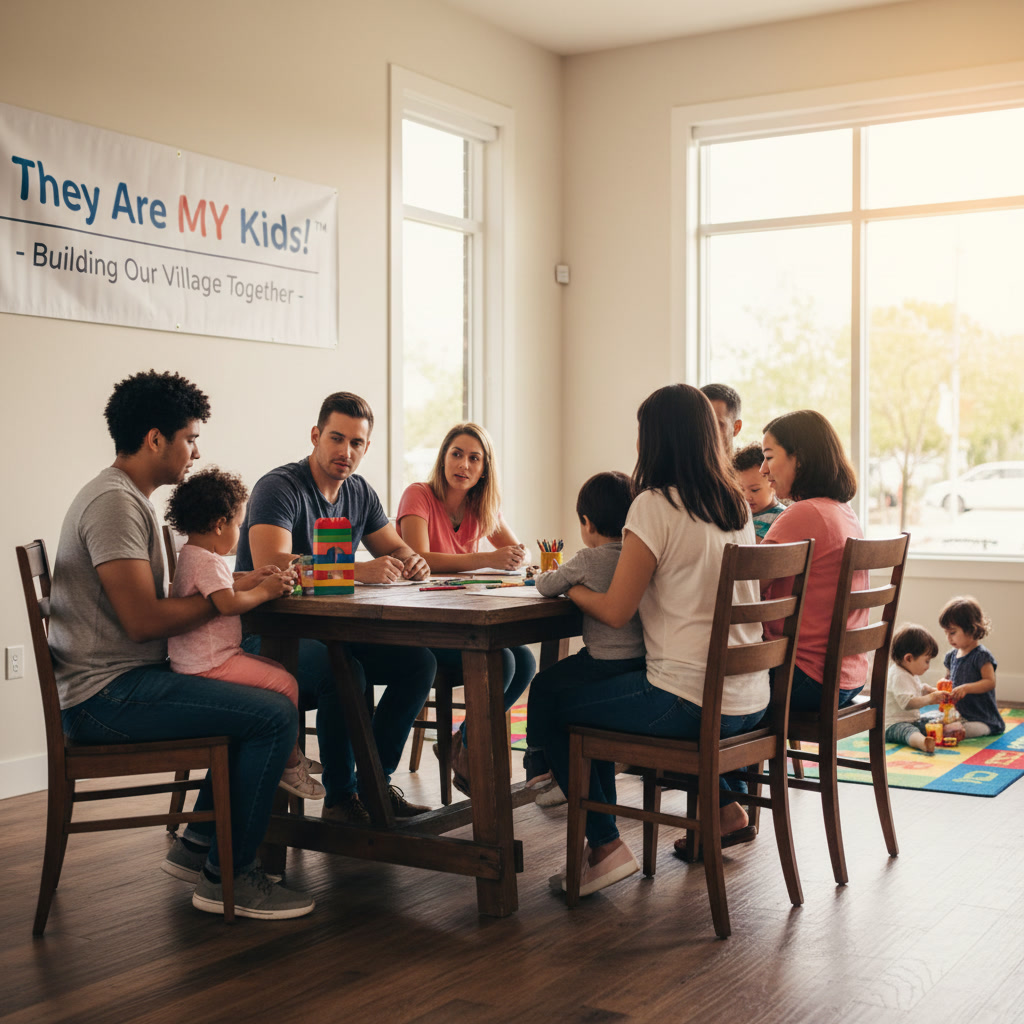
Parents Need Each Other
Parenting has never been easy.
But today's parents face challenges no generation has experienced before.
Technology changes constantly.
Social media competes for children's attention.
Peer pressure travels through smartphones twenty-four hours a day.
Many parents quietly wonder if they're the only ones struggling.
You're not.
Strong families have always depended on strong communities.
Parents need encouragement from other parents.
Not because someone else has all the answers.
But because none of us should have to raise children alone.
When parents share ideas, celebrate victories, admit mistakes, and encourage one another, everyone benefits—including the children.
A movement begins when ordinary parents stop believing they're on an island.
That's the purpose of Parents United.
Not perfection.
Partnership.
Because when parents grow stronger together, children grow stronger too.
If you're feeling overwhelmed, remember this:
You don't need to become a perfect parent.
You simply need to keep growing alongside other parents who are committed to raising capable young adults.
That's how communities—and generations—change.
Give Your Child One Responsibility This Week
Parents often believe confidence comes from encouragement.
Encouragement matters.
But confidence grows from competence.
Children become confident after they successfully do difficult things.
This week, choose one responsibility that your child can own completely.
For younger children, it might be making their bed every morning.
For middle-school students, it could be packing tomorrow's lunch or managing part of the grocery list.
For teenagers, perhaps it's planning one family meal, handling their own laundry, or managing a small monthly budget.
Then do something that's surprisingly hard:
Don't rescue them.
Coach them.
If they forget, let them experience the consequence.
If they struggle, ask questions instead of taking over.
If they succeed, celebrate the effort more than the result.
Every responsibility teaches three lessons:
I can do hard things.
My choices matter.
People can depend on me.
Those are life-readiness skills that last far beyond childhood.
Small responsibilities today become capable adults tomorrow.
This week, don't ask, "How can I make life easier for my child?"
Ask instead,
"What responsibility can help them grow?"
The Most Important Question Most Parents Never Ask
Most parents ask questions like:
How are my child's grades?
Are they staying out of trouble?
Are they making friends?
Those are important questions.
But they aren't the most important one.
The question that changes everything is this:
Who is the adult my child is becoming?
That single question changes the way a parent sees almost every decision.
Instead of asking whether homework is finished, you begin asking whether responsibility is growing.
Instead of asking whether your child won the game, you ask whether perseverance is developing.
Instead of worrying only about behavior today, you begin building character that will last for decades.
Children don't suddenly become responsible adults on their eighteenth birthday. Adulthood isn't something that happens to them. It is something they grow into, one decision at a time.
That means parenting isn't simply about raising children.
It's about building adults.
The greatest gift a parent can give isn't a perfect childhood.
It's preparing a son or daughter who can eventually stand on their own feet with confidence, wisdom, resilience, and character.
Every conversation, every chore, every family meal, every disappointment, every success becomes another opportunity to shape the adult they're becoming.
That's why we say:
Academic success is important.
Life Readiness is essential.
Because one day your child won't need another report card.
They'll need judgment.
Integrity.
Courage.
Responsibility.
Those qualities don't appear by accident.
They are intentionally built by parents who understand the difference between raising children and preparing adults.
The next time you look at your son or daughter, ask yourself one simple question:
Who are they becoming?
Then let that answer guide what you do today.


