

A Program of Futures Fulfilled
Why Virtue Matters
The Foundational Rebar
Character is the Structure
That Stands on Virtue
The strongest part of a child's future is the one you rarely see directly — but you always see its strength in how they live.
You can teach your child to make a bed, handle money, solve a problem, and speak up for themselves. Those skills matter. But one thing decides how they’ll use all of them: virtue — the inner strength to know what’s right and choose it, even when it’s hard, costs something, or nobody’s watching.
What Virtue Means
Virtue is a big word for a simple thing.
It’s who your child is when the pressure is on:
· Honesty when a lie would be easier
· Courage when standing alone is difficult
· Responsibility when no one is checking
· Kindness when there is nothing to gain
· Self-control when the shortcut is right
· Keeping a promise when breaking it would be more convenient
· Integrity when their actions match their values
A child can learn how to succeed. Virtue helps them decide what’s even worth chasing. It’s the difference between a life that just runs, and a life that’s whole — the same person on the inside as the one everyone sees on the outside. Virtue is both the foundation and a life skill. It runs throughout the structure.
Why is virtue the foundation as well as another life skill?
Every other life skill answers the question, “Can my child do this?” Solve a problem? Handle money? Communicate? Bounce back from a setback?
Virtue answers a different question, “How will they use those abilities?”
A child can become highly capable and still make terrible choices — successful without becoming trustworthy, confident without becoming humble. Every ability your child develops will eventually serve something. Virtue decides what.
That is why it does double duty and why we do not place virtue beside the other building blocks. We place that building block beneath the others, supporting them. Life skills teach children what they are capable of doing. Virtue shapes the kind of person they become and the character they develop.
The rebar inside a life
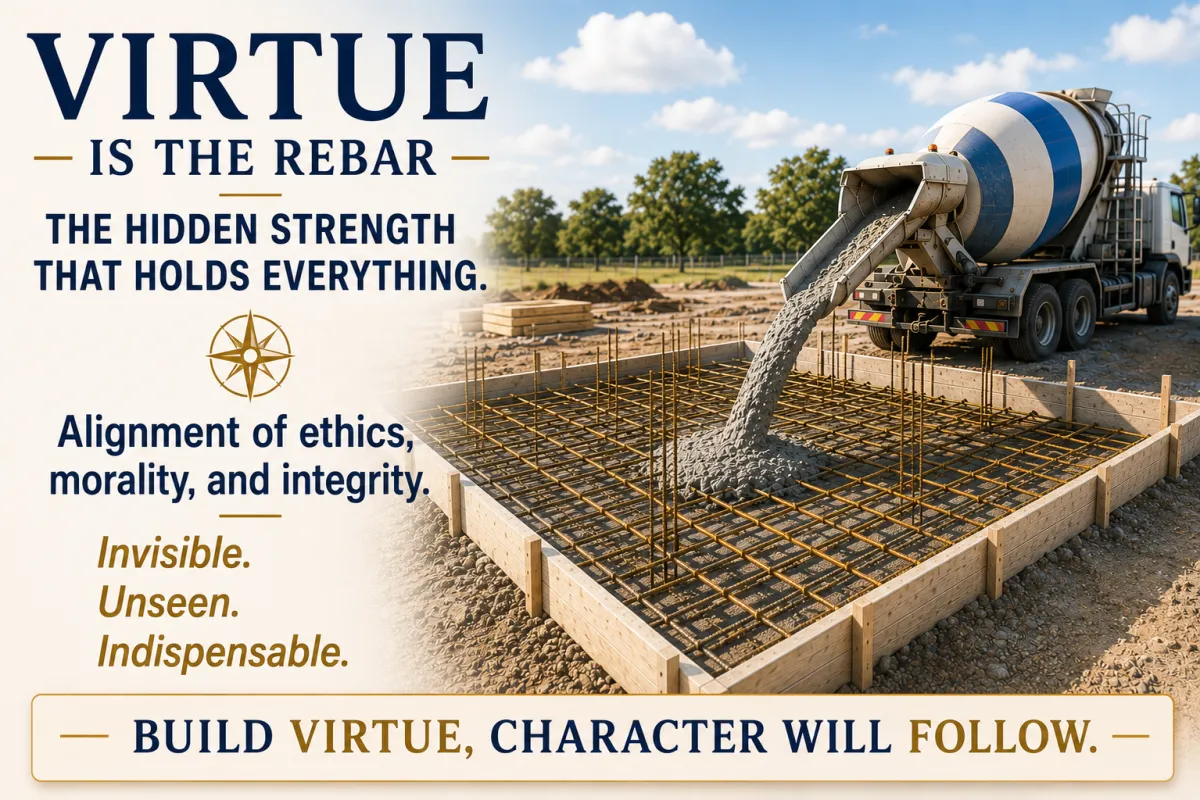
When workers pour a foundation, they hide steel bars — called rebar — inside the concrete. Once the house is finished, you can’t see it. Nobody tours a new house and says, “Wow, nice rebar.” But when pressure comes, that hidden steel is the reason the whole thing stands.
It isn’t built through one lecture, one worksheet, or one big speech from the front seat on the way to school. It’s built slowly — through everyday choices, repeated practice, and the standards your family lives by.
Character is what people see
Virtue is what holds it up.
Character Is What Virtue Becomes
Character isn’t something we teach directly. It appears after years of practicing virtue. Honest choices become honesty. Responsible choices become responsibility. Courageous choices become courage. A child who does a chore after three reminders is following instructions. A child who sees what needs to be done and takes care of it because it is theirs to do is becoming responsible. Repeated choices become habits. Habits become character.
Virtue gives direction to everything else a child learns. Practical skills help them handle life. Mental and emotional strength helps them persevere. Social and civic skills help them live and contribute alongside others. But virtue guides how those capabilities are used. Without it, confidence can become arrogance, resilience can become stubbornness, and leadership can become control. Virtue doesn’t compete with the other building blocks. It gives them direction and purpose.
And virtue is built largely in ordinary moments at home. Children watch parents keep their word, tell the truth when a small lie would be easier, own mistakes, apologize, treat people fairly, and do what is right when no one is watching. Conversations, responsibilities, corrections, examples, and second chances gradually build an inner compass that can guide them when a parent is no longer standing beside them.
That is ultimately the point. Life skills help children know what to do. Virtue helps them choose how to use what they know. Build virtue over the years, and character follows—giving confidence direction, skills purpose, and a young adult something strong to stand on when the pressure comes.
Quick Links
© 2025 Futures Fulfilled. ReadiKids® is a registered trademark. All rights reserved.


